Farm Security and Sustainability in Kenya
Background
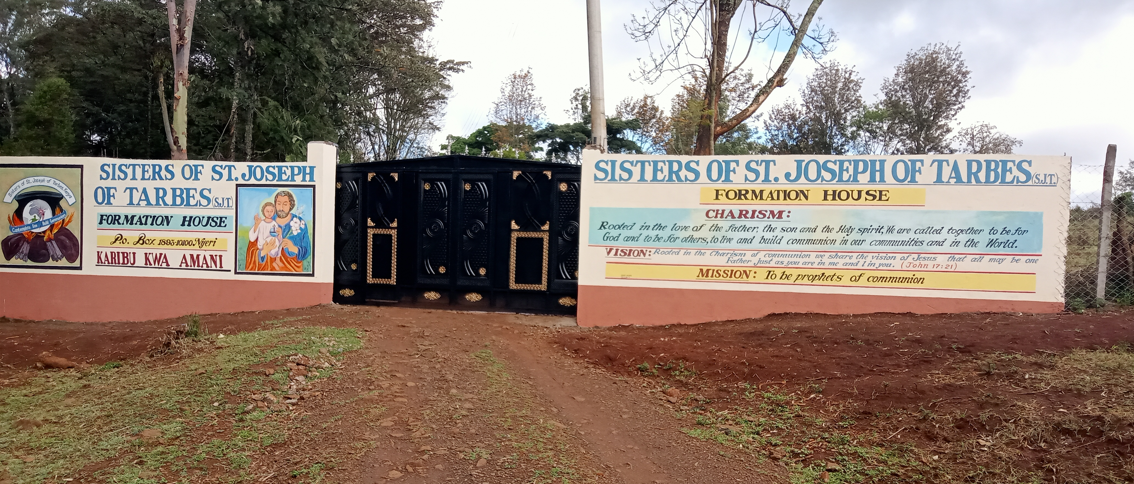
Sr. Josephine Kwenga and the Sisters of St. Joseph of Tarbes run a 25-acre demonstration farm at their formation house in Nyeri, Kenya. Located near Mt. Kenya, the farm serves a dual purpose: it acts as a critical training ground for local indigenous farmers and functions as a primary source of healthy food to sustain the Sisters' formation house.
For two years, the Sisters successfully piloted organic farming utilizing permaculture methods. This approach significantly increased both the yield and quality of their crops, positioning the community to become self-sufficient. Sr. Josephine’s goal was to expand this initiative to fully sustain their community, provide healthy food for consumption, share produce with neighbors in need, and sell surplus crops to generate a supportive income for the long-term sustainability of their mission.
Challenge
Despite the initial success of their permaculture pilot, the mission's long-term sustainability was threatened by its geographic location. Bordering a dense forest and lacking a proper perimeter boundary, the farm suffered from intense human-wildlife conflict, repeated trespassing, and theft. Wild animals frequently invaded the property to destroy crops, while intruders vandalized equipment and stole produce.
To mitigate these losses, the Sisters attempted to use guard dogs across the farm to scare away wildlife. However, under the cover of darkness and during heavy rain, wild animals easily bypassed the dogs, leaving crops severely damaged. These constant incursions frustrated farm workers, compromised the safety and peace of the young women in formation, and undermined the Sisters' hard work—stifling agricultural productivity and draining vital community resources.
Solution
Sr. Josephine and the Sisters of St. Joseph of Tarbes sought financial assistance to secure their farmland. With a grant from Sisters Rising Worldwide, the Sisters launched a project to install a new security fence around their farm.
The funds procured construction materials—including wire mesh, chain links, stones, sand, cement, nails, and metal—as well as the labor required to build a security fence around the entire 25-acre parcel. The implementation of the project immediately injected value back into the local economy by creating construction jobs for seven local individuals. Beyond the physical infrastructure, the project served as a practical intervention in human-wildlife conflict mitigation, creating a safe, peaceful, and professionalized farming environment.
Results
The completion of the security fence yielded immediate, measurable, and systemic impacts for the Sisters and the surrounding neighborhood.
Enhanced Security and Peace of Mind: Trespassing, theft, and wildlife intrusions dropped significantly. One formee noted that she previously felt uneasy at the farm due to strangers and wild animals, but the fence gave her the confidence and freedom to focus fully on her studies and spiritual vocation. Sr. Teresia, a formator, expressed immense relief that the young Sisters under her care could finally learn and pray in a secure, undisturbed setting.
Increased Agricultural Productivity: With wild animals and stray livestock successfully barred from entry, crops matured undisturbed. One of the farm workers reported that with the risk of crop destruction mitigated, the farm work became deeply fulfilling, knowing his labor would finally result in a successful harvest.
Financial and Mission Sustainability: As a direct result of the fence, farm production surged. The Sisters now reliably meet 60% of their household and formation needs, generate a modest income by selling surplus harvests, and foster community solidarity by sharing food with vulnerable neighbors.
Job Creation and Professional Growth: On top of the initial construction jobs, the farm's increased economic resilience enabled Sr. Josephine to permanently hire a young agroecologist who would have otherwise left due to local unemployment. His retention ensures professional, long-term ecological management of the land.
Building on this success, the Sisters are now looking toward the future, and seek to reinforce the security fence with a living, environmentally friendly barrier of trees and shrubs to maximize ecological sustainability.
.jpg)
.png)
.jpg)