Rebuilding Communities in Conflict
When Sr. Rose noticed a troubling trend in violent crime in the Kansas City area, she knew exactly how to help. Sr. Rose is a board member of the Center for Conflict Resolution (CCR). The center provides mediation services, facilitation and training using restorative justice processes in safe, structured and positive environments. “By dealing with conflict in the early stages, CCR has demonstrated that many disputes can be resolved without harm or violence,” she reports. “Much of the violence we see is due to unresolved conflict between people who know each other and resort to violence when they believe it is the only option.”
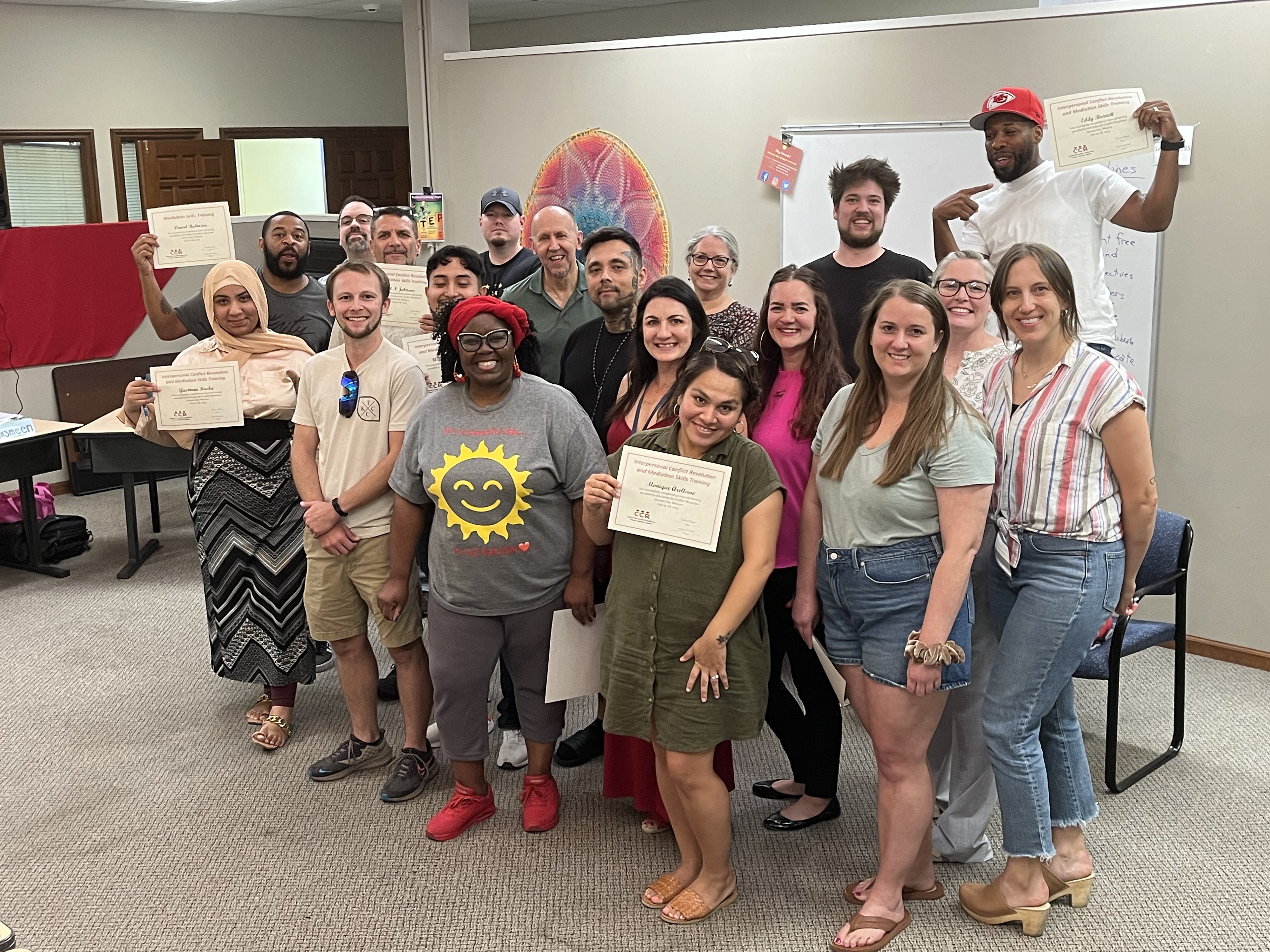
With a grant from SRW, Sr. Rose helped CCR expand their Community & Neighborhoods program which trains faciliatorts in restorative justice and trauma healing and provides restorative mediation services to community members in need. During mediation, CCR facilitators guide parties in conflict through a restorative process aimed at repairing damage. These included landlord-tenant disputes, neighbor conflicts, and family or friend disagreements. Facilitators have each party share their perspective of the conflict and then collaboratively create a plan that includes accountability, needs fulfillment, and relationship repair.
In one instance, mediators facilitated an assault case between two former friends and coworkers. With the help of CCR, the two were able to talk with each other and acknowledge the impact the incident had on their lives. They reached an agreement to make it right and prevent it from happening again, and the victim allowed his case to be dismissed from court. “Both parties wished they could have participated in mediation sooner,” Sr. Rose shared.
In addition, the grant also funded workshops on trauma awareness and healing, as well as training on conflict mediation for community members, ensuring the growth of restorative justice practices and continued healing in schools and other local organizations. “Thanks to SRW,” Sr. Rose says, “we can interrupt cycles of violence, and rebuild relationships in communities that need it most.”
.png)
.jpg)